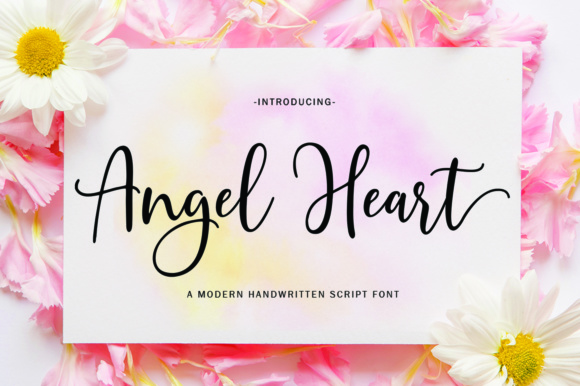
Angel Heart Script: Where Modern Handwriting Meets Design
Finding a typeface that captures authentic emotion without sacrificing clarity is a common challenge. Many script fonts lean too heavily into illegible flourish or feel overly casual. Angel Heart Script occupies a compelling middle ground. It’s a modern script font characterized by its fluid, handwritten style, decorative swashes, and notably dancing baselines. This isn’t a static, uniform typeface; it has a rhythm and energy that mimics real penmanship, making it feel personal and alive. The overall personality is one of elegant informality—approachable yet distinctly stylish.
The Visual Language of Angel Heart
At its core, Angel Heart Script is a premium font designed for impact in display contexts. Its letterforms connect in a flowing, cursive manner, but with a contemporary edge. The “dancing baselines” mean that each letter doesn’t sit perfectly on an invisible straight line; instead, they have a subtle, organic rise and fall. This feature is key to its charm, preventing it from looking mechanical and adding a layer of handcrafted authenticity. The decorative characters—often including stylistic alternates and swash extensions—allow designers to add unique flair to initial letters or specific words, transforming simple text into a visual centerpiece.
This handwritten font style bridges the gap between a formal script font and a casual sans serif font. It carries the warmth and personality of handwriting but is crafted with enough consistency to function as a reliable design asset. When you use Angel Heart, you’re not just setting words; you’re infusing a project with a specific mood—one that’s creative, feminine, romantic, or whimsically sophisticated, depending on the context and color palette.
Strategic Applications: From Brand Identity to Social Media
Understanding where a creative font like Angel Heart Script excels is crucial for its effective use. Its strength lies in projects where brand perception and audience engagement hinge on conveying personality and emotion. Here’s a practical breakdown:
- Branding and Logo Design: For businesses in the lifestyle, wedding, beauty, or artisanal space, Angel Heart can form the core of a brand identity. It works beautifully for a logotype, especially when paired with a clean, geometric sans serif font for body text. The key is ensuring the brand’s voice aligns with the font’s elegant, personal vibe.
- Editorial and Packaging Design: Think of magazine headers, chapter titles in a book, or the name of a boutique candle on its label. In editorial design and packaging design, this display font grabs attention and sets a thematic tone instantly. It’s less suited for long paragraphs but perfect for headlines that need to feel bespoke.
- Digital Presence and Social Media Graphics: On platforms like Instagram or Pinterest, where visual first impressions are everything, Angel Heart Script can make quotes, promotional announcements, and story highlights stand out. Its inherent style is highly shareable and can elevate a simple graphic into something that feels custom-designed.
- Web Design and User Experience: In web design, use it sparingly and strategically. It’s excellent for hero section headlines, call-to-action buttons, or special announcement banners. Avoid using it for navigation menus or main body copy, as its decorative nature can hinder readability at smaller sizes or on low-resolution screens.
- Personal Projects and Craft: For wedding invitations, greeting cards, or custom merchandise like t-shirts and mugs, this font is a natural fit. It brings a professional, polished look to personal creations, making them feel store-bought in the best possible way.
Practical Guidance for Designers and Creators
Integrating any new typeface into your workflow requires more than just liking its look. Here’s how to approach Angel Heart Script with a professional mindset.
Evaluating Project Fit and Readability
Before selecting it, ask: Does the project’s tone call for a handwritten, personal touch? A law firm’s website would be a mismatch, but a boutique bakery’s menu is perfect. Always test for readability. Set a headline at the intended size and view it on both a desktop monitor and a mobile phone. The dancing baselines and connected letters should remain clear. If any words become ambiguous, consider using the font for a single impactful word or the brand name only, and choose a more neutral font for supporting text.
Mastering Font Pairing and Hierarchy
The most effective use of a display font like Angel Heart is in creating strong visual hierarchy. Pair it with a stable, highly legible serif font or sans serif font. For example, use Angel Heart for the main headline, a medium-weight sans serif for subheadings, and a regular serif for body copy. This contrast creates a clear, professional structure. The script font draws the eye first, while the companion fonts provide calm, readable support. Always check the font’s included styles—does it have bold or italic versions? Sometimes, using a slightly heavier weight of your companion font can create better balance than using Angel Heart at a larger size.
Leveraging Features and Licensing
Explore the full character set. Many premium fonts include alternate characters, swashes, and ligatures accessed through OpenType features in design software like Adobe Illustrator or Photoshop. Swapping out a standard “t” for a stylistic alternate can add a unique signature to your design. Crucially, verify the commercial font license. Ensure it covers your intended use—whether for a client’s logo, print-on-demand products, or a digital template you plan to sell. Respecting licensing is a non-negotiable part of professional practice.
Ultimately, Angel Heart Script is more than just a modern typography choice; it’s a tool for storytelling. By understanding its visual personality, applying it to the right contexts, and pairing it thoughtfully, you can leverage this font to create designs that don’t just look good, but feel genuinely connected to the audience. It’s about using design assets